


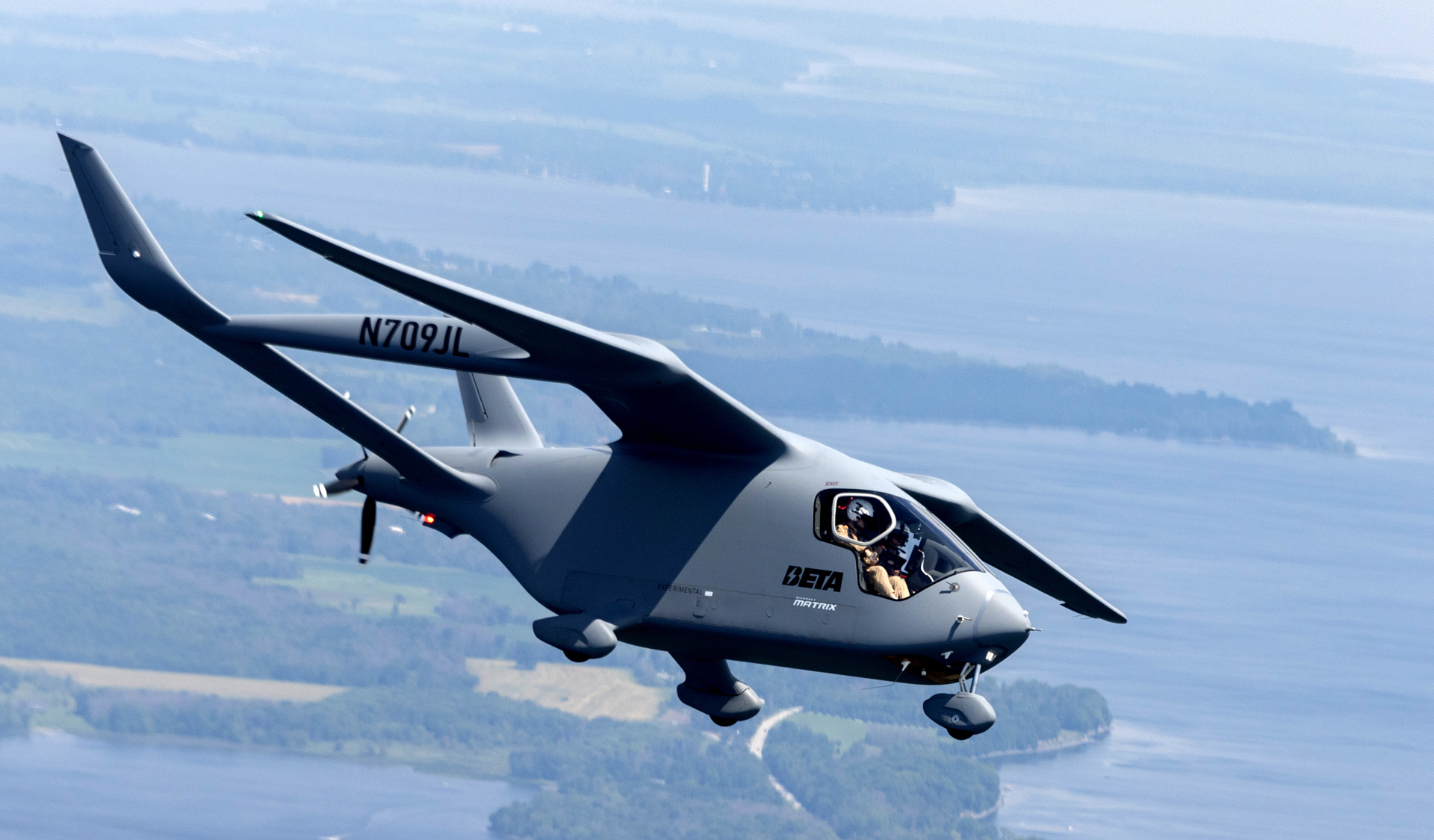
Sikorsky, a Lockheed Martin company, will integrate its MATRIX™ autonomy suite into BETA Technologies’ ALIA MV250 hybrid vertical take-off and landing (hVTOL) aircraft, expanding the family of platforms equipped with scalable autonomous capabilities.
The integration follows successful testing of Sikorsky’s MATRIX autonomy suite on BETA’s ALIA CX300 conventional take-off and landing aircraft, which served as a testbed for the MV250 initiative. The open-architecture autonomy system is designed for integration with different flight control frameworks, enabling rapid adoption across multiple platforms.
The BETA MV250 is expected to join Sikorsky’s growing portfolio of MATRIX-enabled platforms, including the S-70UAS U-Hawk, Sikorsky Nomad VTOL UAS and the Sikorsky Optionally Piloted Vehicle (OPV) Black Hawk. The aircraft is designed to support contested logistics, rapid resupply, casualty evacuation (CASEVAC) and other high-tempo missions.
“Integrating the MATRIX autonomy stack into the MV250 is another step forward in providing a range of solutions for contested logistics missions, which we have demonstrated in autonomous operations since 2021,” said Rich Benton, Vice President and General Manager of Sikorsky. “All platforms equipped with MATRIX autonomy can be commanded using the same interface, giving operators the ability to seamlessly manage various systems with just a few taps. MATRIX technology represents an opportunity to get safe, reliable, certifiable autonomy into a range of platforms as quickly as possible.”
“Sikorsky has spent years proving that autonomy is safe, reliable, and operationally useful,” stated Kyle Clark, Founder and Chief Executive Officer of BETA Technologies. “The MV250 is low cost, high speed and simple and designed for autonomous integration. Bringing MATRIX autonomy onto the MV250 combines those investments into a platform that can do high-risk missions without putting personnel at risk.”
MATRIX autonomy has accumulated more than 1,000 flight hours, over 500 successful tests and demonstrations, and has been integrated across more than 20 platforms. The system also forms the core of the Defense Advanced Research Projects Agency (DARPA) Aircrew Labor In-cockpit Automation System (ALIAS) programme.
