


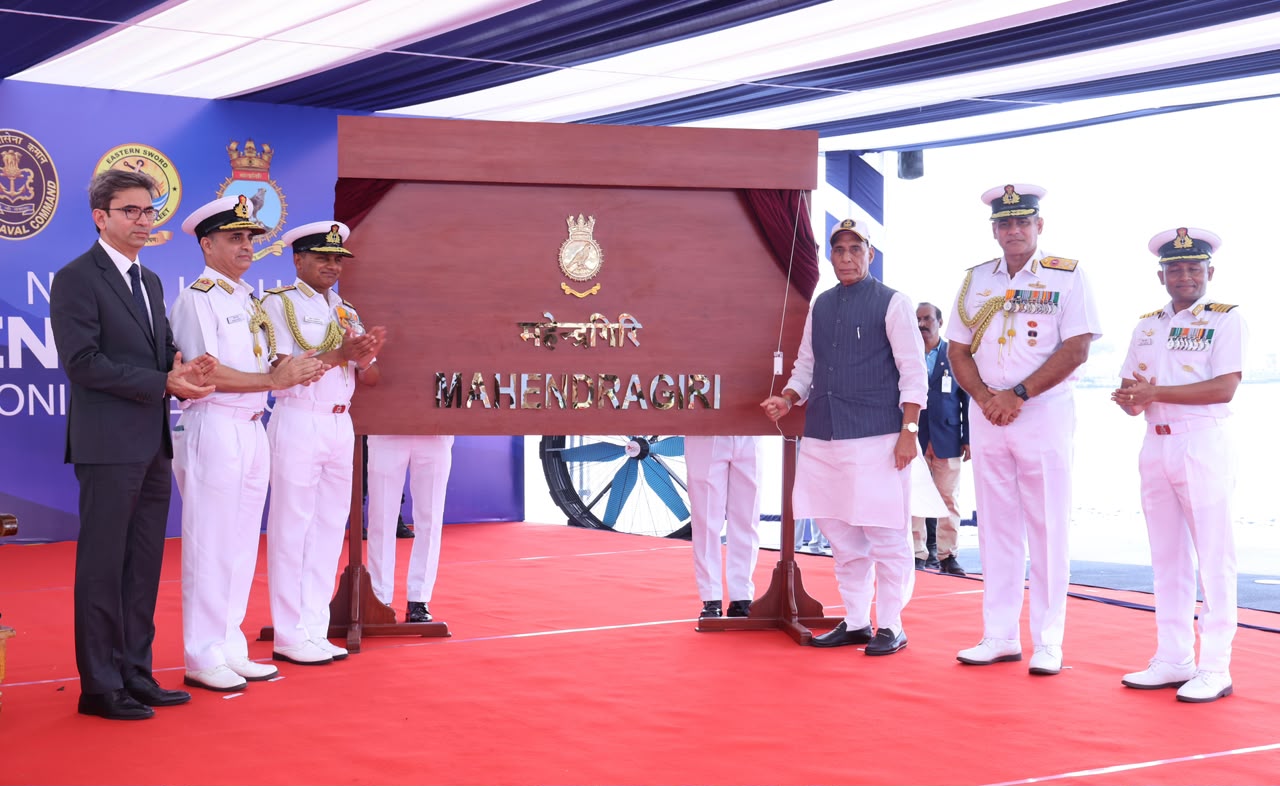
The Indian Navy inducted the indigenously built stealth frigate INS Mahendragiri into its Eastern Fleet during a ceremony in Visakhapatnam on July 11, 2026, presided over by Defence Minister Rajnath Singh. He described the frontline warship as a reflection of India’s growing self-reliance in shipbuilding, backed by advanced design, manufacturing excellence and a rapidly expanding naval industrial ecosystem.
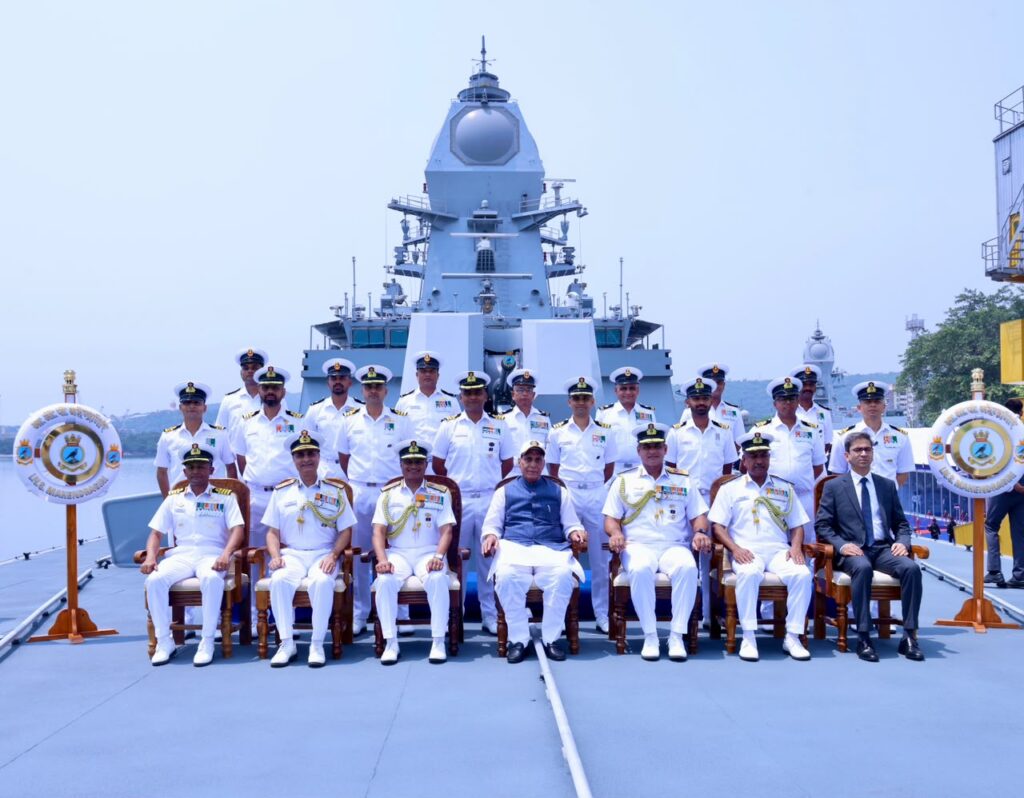
INS Mahendragiri is the sixth Project 17A stealth frigate to join the Indian Navy in the last 18 months. Designed by the Indian Navy’s Warship Design Bureau and built by Mazagon Dock Shipbuilders Limited (MDL), the frigate is capable of undertaking fleet air defence, anti-surface warfare, anti-submarine warfare, maritime interdiction, surveillance, and humanitarian assistance and disaster relief (HADR) missions.
The 6,670-tonne warship built with over 75% indigenous content, can achieve speeds of up to 28 knots. It is equipped with advanced stealth features, modern sensors, network-centric combat systems, supersonic surface-to-surface missiles, medium-range surface-to-air missiles, anti-submarine warfare systems and an embarked multi-role helicopter.
“INS Mahendragiri can be equipped with the BrahMos surface-to-surface missile, one of the world’s fastest and most lethal cruise missiles. It also features a combination of multifunction radar and Surface-to-Air Missiles capable of detecting and neutralising aerial threats at extended ranges. Its arsenal also includes an indigenous rocket launcher, torpedo launchers, an Integrated Anti-Submarine Defence System, an Electronic Warfare suite and a Close-In Weapon System. All these capabilities make the warship formidable and resilient,” said Rajnath Singh, exuding confidence that the “blue-water ship” will safeguard India’s maritime interests not just near the coast but far out in the deep oceans as well.
Defence Minister Rajnath Singh highlighted that emerging technologies such as drones, artificial intelligence, cyber warfare, space-based capabilities, hypersonic weapons and unmanned systems are reshaping modern warfare, while stressing that conventional military capabilities remain fundamental. He emphasised that advanced technologies and conventional platforms complement one another in building a credible and combat-ready force.
“Future wars may be fought with Artificial Intelligence, but they will still be won by national resolve, trained soldiers and credible military power,” he stated.
He added that “Operation Sindoor was a prime example of the effective integration of conventional and modern capabilities to safeguard national security,” describing INS Mahendragiri as a symbol of India’s commitment to building a technologically advanced and combat-ready Navy.
“India is a net security provider and a trusted partner dedicated to ensuring security and development across the region,” said Rajnath Singh, adding that the Indian Navy has earned recognition as a First Responder and Preferred Security Partner through humanitarian assistance and disaster relief operations, anti-piracy missions and evacuation operations.
Chief of the Naval Staff Admiral Krishna Swaminathan termed INS Mahendragiri a symbol of India’s growing maritime capability and technological self-reliance. He said the induction of the sixth Project 17A frigate marks another milestone in indigenous warship construction and strengthens the Navy’s operational capability.
The ceremony included the traditional breaking of the Commissioning Pennant and the maiden hoisting of the National Flag onboard in the presence of senior naval officers, veterans, industry representatives and invited guests.
