


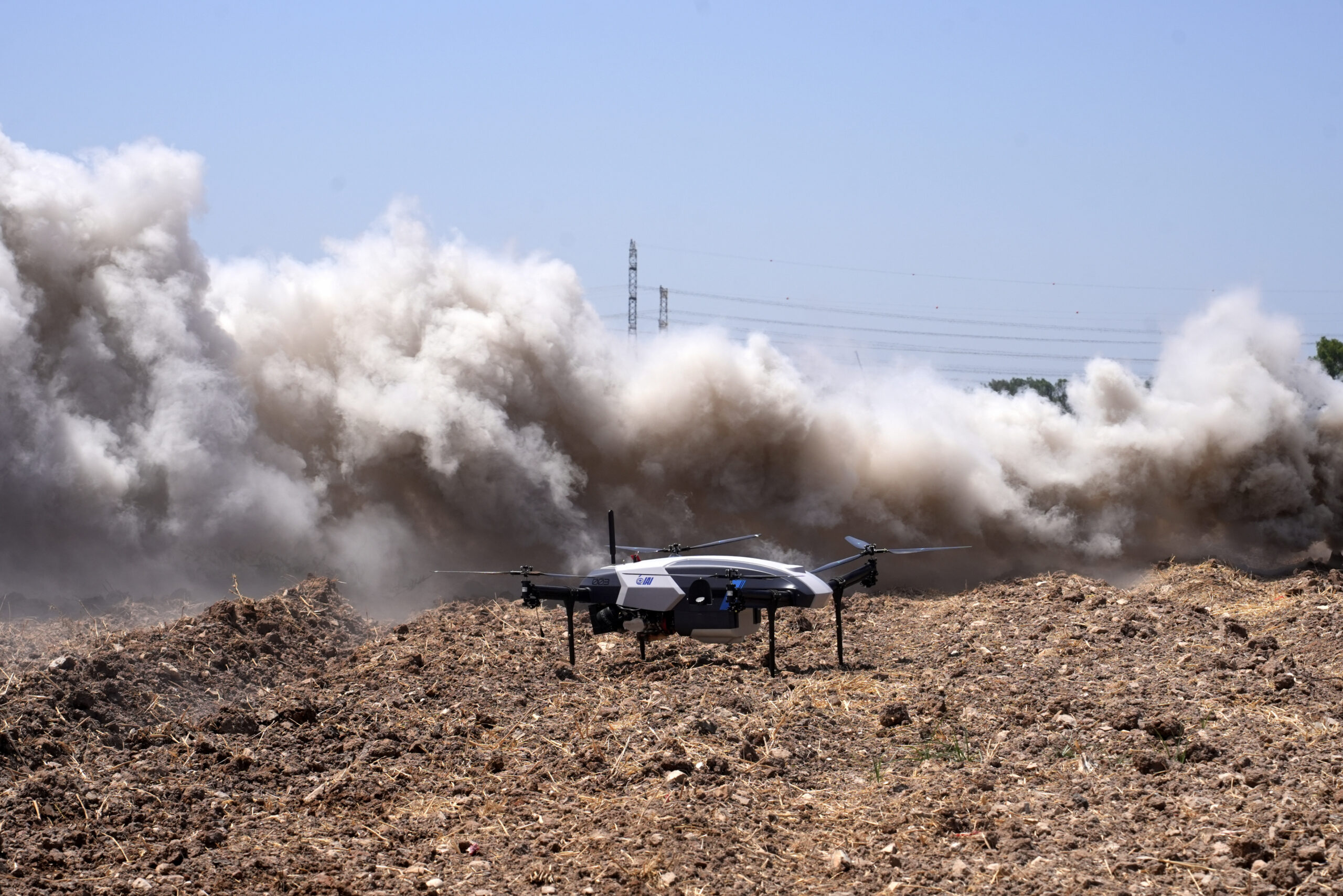
The Israeli Ministry of National Security, Israel Innovation Authority, Israel Aerospace Industries (IAI), the Technion, and the Israel Fire and Rescue Authority have launched a joint project to develop an advanced drone-based system for real-time fire detection and localisation.
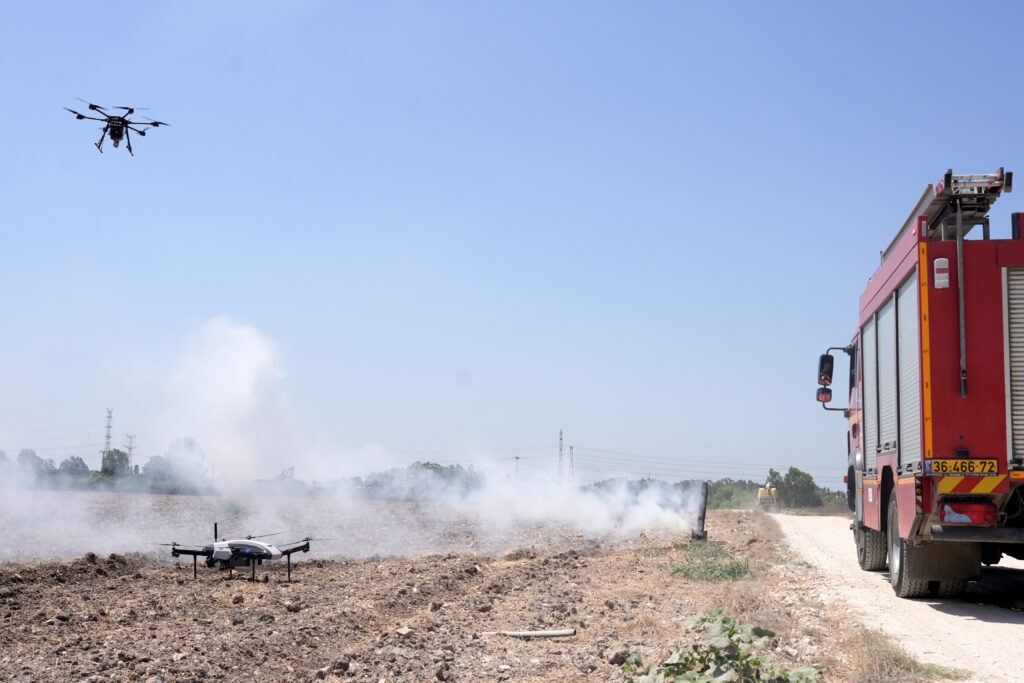
The innovative solution aims to identify and locate fire outbreaks within minutes of ignition using artificial intelligence (AI), enabling emergency responders to act faster and improve wildfire management. The system has completed its first flight test, with further trials planned to evaluate its performance across different operational scenarios and environmental conditions.
The system has been integrated onto IAI’s APUS 25, an advanced tactical Vertical Takeoff and Landing (VTOL) drone designed for long-endurance missions. The platform can operate from almost any location without requiring a dedicated runway, fly at high altitudes and remain airborne for extended periods while carrying specialised payloads.
Equipped with day and night vision cameras, infrared capabilities and advanced image-processing technologies, the system can detect fire hotspots through darkness and dense smoke. AI algorithms analyse data in real time to identify anomalies, detect emerging fires and determine their exact location from high altitudes, transmitting alerts directly to the Israel Fire and Rescue Authority’s command and control centre.
The system can cover hundreds of square kilometres with a single drone, detect fires within minutes of ignition and provide meter-level location accuracy before incidents develop into large-scale wildfires.
Based on the APUS 25 platform, the solution is designed for persistent surveillance missions under challenging terrain and weather conditions. Powered by an internal combustion engine, the drone offers extended endurance compared to battery-powered systems.
During operations, firefighters can define a search area by marking a polygon on a digital map. The drone then operates autonomously, positions itself at the optimal observation point and continuously scans the designated area for four to five hours, providing emergency teams with real-time situational awareness to support decision-making and resource deployment.
“This project represents another step forward in advancing innovative technological capabilities for Israel’s security and emergency organizations. The combination of drones, artificial intelligence, and advanced data-processing capabilities has the potential to enable earlier fire detection, improve operational situational awareness, and shorten response times in the field,” said Yaron Schone, Head of R&D Technology Department, Israel Ministry of National Security.
Moshe Levy, Executive Vice President and General Manager of the Military Aircraft Group, IAI, said, “For many years, IAI has been developing advanced technological solutions for complex challenges across both defence and civilian domains. This unique project demonstrates our ability to leverage our expertise, operational experience, and capabilities in aviation, artificial intelligence, and autonomous systems to address an issue of both national and global importance.”
Kerem Nevo, Vice President of the Growth Division, Israel Innovation Authority, stated that the project demonstrates how the integration of drones, AI and operational capabilities can create innovative solutions for urgent challenges.
Prof. Asaf Schuster, Henry and Marilyn Taub Faculty of Computer Science at the Technion, added that the system highlights how scientific research can be transformed into practical solutions that support faster and more efficient fire response through real-time information.
Lieutenant General Eyal Caspi, Commissioner of the Israel Fire and Rescue Authority, highlighted that collaboration will support the development of next-generation firefighting capabilities by enhancing early detection, command and control, and operational monitoring.
The project represents a step towards building a smarter emergency response ecosystem, combining autonomous drones, artificial intelligence and advanced analytics to improve wildfire prevention and protect lives, communities and natural resources.
