


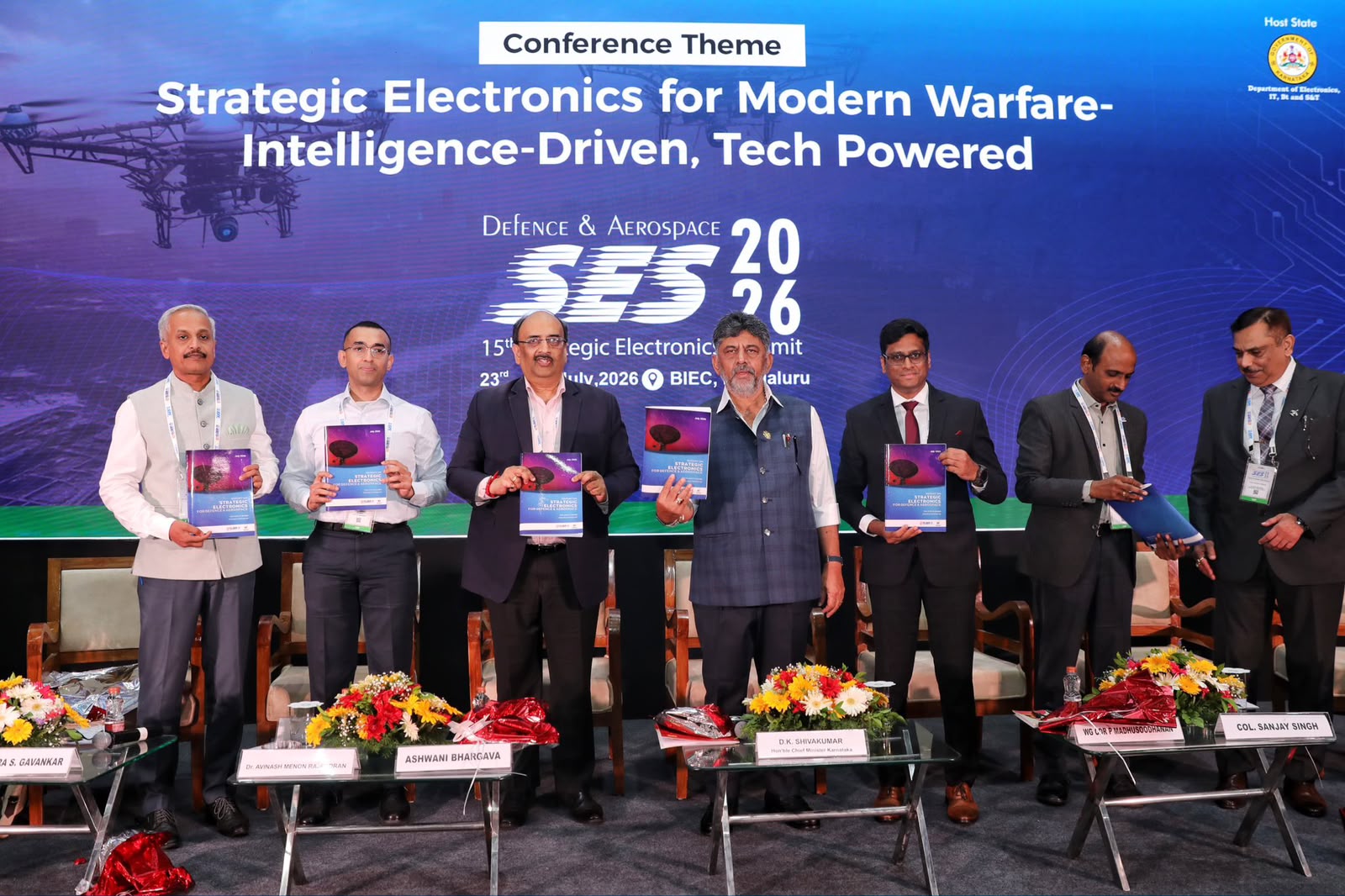
The 15th Strategic Electronics Summit (SES 2026), organised by the Electronic Industries Association of India (ELCINA), opened on 23 July 2026 at the Bangalore International Exhibition Centre (BIEC), bringing together government, defence and industry leaders to strengthen India’s defence and aerospace electronics ecosystem and advance the vision of Atmanirbhar Bharat.
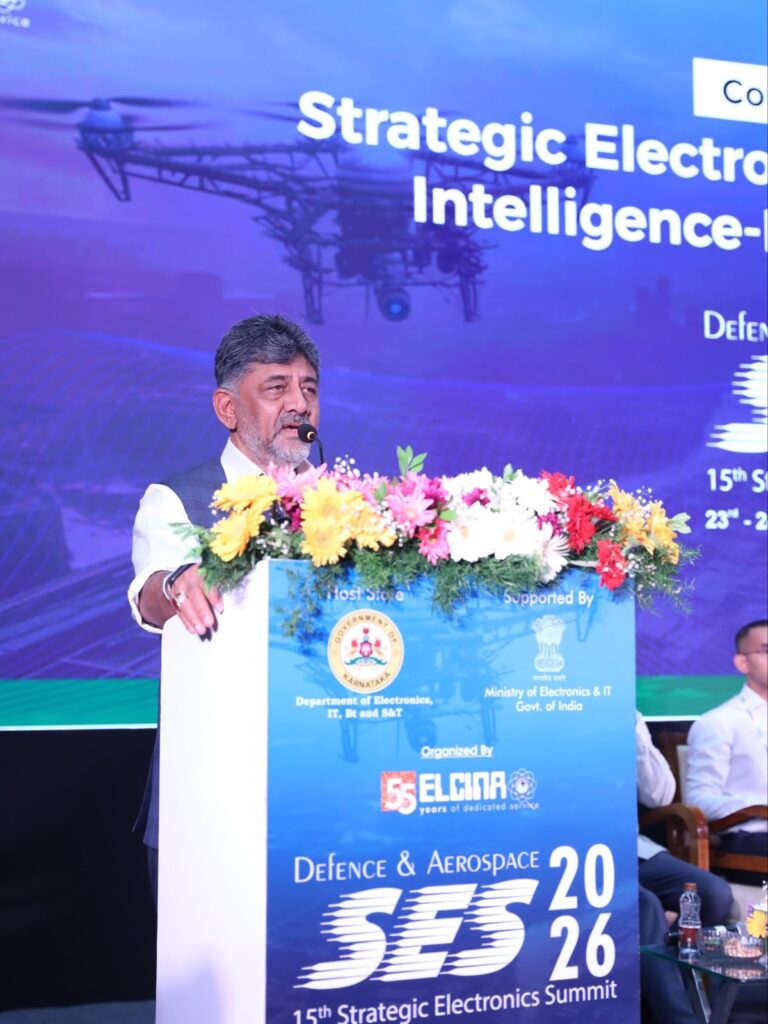
The two-day summit was inaugurated by Karnataka Chief Minister D.K. Shivakumar. The opening ceremony was attended by M.B. Patil, Minister for Large & Medium Industries and Commerce & Industries, Government of Karnataka; Dr. Rajkumar Upadhyay, Chief Executive Officer of the Centre for Development of Telematics (C-DOT); Manoj Jain, Chairman and Managing Director of Bharat Electronics Limited (BEL); Dr. B.K. Das, Distinguished Scientist and Director General at the Defence Research and Development Organisation (DRDO); Lt. Gen. Rajeev Sahni, Director General of Electronics and Mechanical Engineers (DG EME), Indian Army; Dr. Sasikumar Gendham, President of ELCINA; and Sushil Pal, Joint Secretary, Government of India.
In his inaugural address, Shivakumar highlighted the need for balanced regional development and urged industry to support rural education through corporate social responsibility initiatives. “Our objective is to improve rural education and reduce migration to Bengaluru. The city’s population has grown from around six to seven million to nearly 14 million in the last two decades, placing enormous pressure on urban infrastructure. We want development to reach every part of Karnataka,” he said.
Emphasising Karnataka’s technology ecosystem, he added, “Karnataka produces over one lakh engineers every year through more than 250 engineering and medical colleges. Bengaluru alone has nearly 2.6 million IT professionals, more than California, making it one of the world’s largest technology talent hubs.”

Building on the state’s push to strengthen advanced manufacturing, Patil outlined Karnataka’s semiconductor ambitions. “Our vision goes beyond manufacturing. Karnataka should enable the complete semiconductor value chain, from design and development to prototyping, testing, certification and exports. We are ready to partner with industry to achieve this goal and invite investors to make Karnataka the preferred destination for Semiconductor Mission 2.0,” he said.
He further noted, “Bengaluru is home to more than 100 chip design companies, including firms working on advanced three-nanometre chip technology, supported by a robust ecosystem of GCCs (Global Capability Centres), research institutions and engineering talent.”
Patil also announced that Karnataka’s 200-acre Semiconductor Park at KWIN City is scheduled to become operational in December 2026. Backed by ₹23,000 crore in approved investments from Applied Materials, Lam Research and Bharat Semi Systems, the park is expected to support the complete semiconductor value chain while integrating MSMEs into global supply chains.
Addressing the summit, Lt. Gen. Sahni highlighted this year’s theme, “Strategic Electronics for Modern Warfare – Intelligence-Driven, Tech-Powered,” calling for rugged, indigenous electronic systems capable of meeting modern battlefield requirements. The inaugural session also underscored the need to strengthen domestic design, manufacturing and innovation across defence, cyber, space and unmanned systems to support India’s long-term strategic objectives.
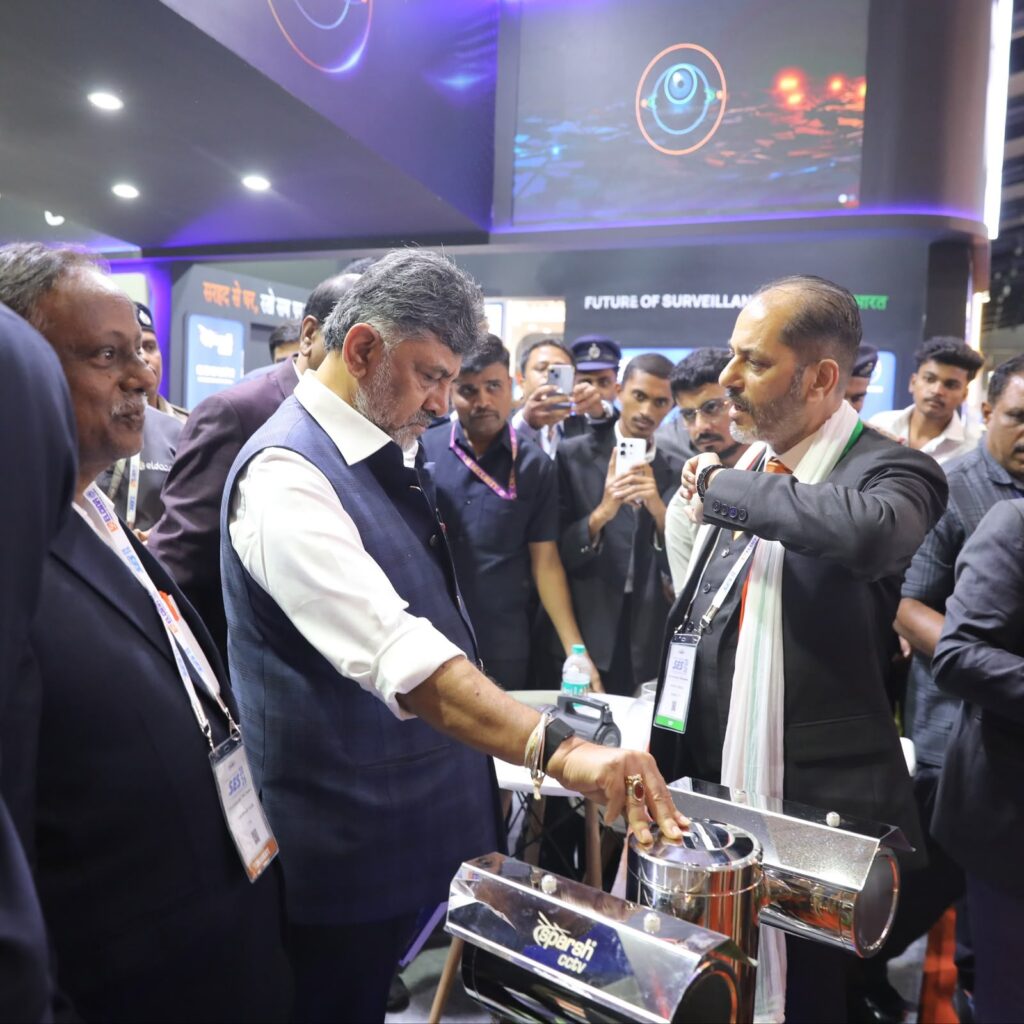
The exhibition featured AI-enabled embedded systems, radar technologies, sensors, communication systems and drone platforms from organisations including DRDO, BEL, HAL, startups and MSMEs. The summit also hosted the Defennovation Awards, recognising excellence in defence electronics research, design and manufacturing.
The opening day concluded with industry interactions and a panel discussion, where Patil engaged with exhibitors and startup founders while Lt. Gen. Sahni met delegates, reinforcing collaboration between government, the armed forces, academia and industry.
